
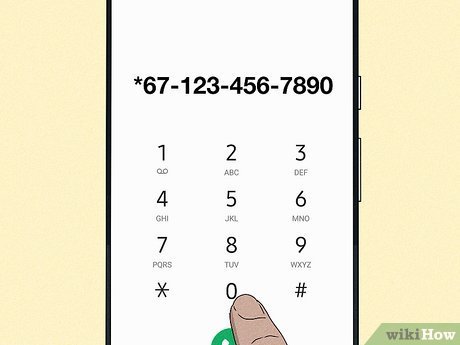
Looking to keep your phone number private? Implementing a code for hiding number can be the solution. By using a few simple steps and settings, you can ensure that your phone number is not revealed when making calls. This code is especially useful for maintaining privacy in various situations. Let’s delve into how you can easily set up this feature on your device and keep your personal information secure.

The Magic of Code for Hiding Number
Have you ever wanted to send secret messages where only you and your friend can understand the hidden meaning? Well, the world of coding has a fascinating solution for that – code for hiding numbers! In this blog post, we will delve into the exciting world of encoding and decoding numbers using simple yet powerful techniques. Get ready to unlock the mystery behind hiding numbers with code!
Understanding the Basics
Before we jump into the fun stuff, let’s first understand what hiding numbers with code actually means. It’s like having a special key that can encrypt a number into a different form that looks random to others but can be easily decrypted back to the original number by someone who knows the code.
Imagine having a secret decoder ring like spies in movies, but instead of decoding words, you’re decoding numbers! How cool is that?
Simple Number Substitution
One of the simplest ways to hide a number using code is through number substitution. It’s like replacing each digit of the number with a different digit based on a predefined rule. Let’s break it down with an example:
Imagine you have the number 1234. Using a simple substitution code, you can replace each digit with another digit to form a new number. For instance, you can replace 1 with 5, 2 with 7, 3 with 2, and 4 with 9. So, 1234 becomes 5729. To decode it, you just need to reverse the substitution rule to get back the original number.
It’s like having your own secret number language that only you and your friend understand!
Advanced Encoding Techniques
While simple number substitution is fun, there are more advanced encoding techniques that make hiding numbers even more exciting. One such technique is using mathematical operations to transform numbers.
Modular Arithmetic
Modular arithmetic is a fancy term for performing operations like addition, subtraction, multiplication, and division but taking the remainder when divided by a specific number. For example, if you perform 7 + 5 but take the remainder when divided by 10, you get 2. This modular operation can be used to encode and decode numbers in a more complex way.
By applying modular arithmetic with a specific modulus (a number used for division in modular operations), you can hide numbers in a way that requires both the encoded number and the modulus to decode it. It’s like adding an extra layer of mystery to your hidden numbers!
Binary Encoding
Another fascinating technique is binary encoding, where numbers are represented in binary form using only 0s and 1s. Each digit in a number is converted into its binary equivalent, allowing for a compact representation of numbers that can be decoded back to the original number.
For example, the number 8 in binary is 1000, and the number 13 is 1101. By using binary encoding, you can hide numbers in a way that might look like gibberish to others but can be easily decoded if you know the binary conversion rule.
Practical Applications
Now that you’ve learned some cool techniques for hiding numbers with code, you might be wondering, “How can I use this in real life?” Well, here are a few practical applications that show the magic of hidden numbers:
Secure Communication
Imagine you and your friend want to exchange secret messages without anyone else understanding them. By encoding numbers using the techniques we’ve discussed, you can send messages that only your friend can decode using the same code. It’s like having your own secret language!
Password Protection
When you create passwords for your accounts, websites often use encryption techniques to protect your sensitive information. By hiding numbers within the password using encoding methods, your password becomes more secure and less prone to hacking attempts.
Puzzle Solving
If you love solving puzzles or riddles, hiding numbers with code can add an extra layer of complexity to the game. You can create number-based puzzles where decoding the hidden numbers reveals the key to solving the puzzle. It’s a fun way to challenge your brain!
Now that you’ve uncovered the magic of hiding numbers with code, you have a new superpower in your coding arsenal. Whether you want to send secret messages, protect sensitive information, or create fun puzzles, the world of encoding and decoding numbers is full of endless possibilities.
So, grab your imaginary spy gear, put on your detective hat, and start exploring the exciting world of hiding numbers with code. Who knows what hidden messages you’ll uncover next!
Dial these phone codes to anonymously call or improve your data 🤯 (iPhone Tips, Life Hacks, Tech)
Frequently Asked Questions
How can I hide a number in my code?
To hide a number in your code, you can use various methods such as encryption, obfuscation, or storing the number in a separate file or database. Encryption involves transforming the number using a cryptographic algorithm, making it unreadable without the decryption key. Obfuscation involves making the code more complex or unclear to hide the number from casual observers.
Is it important to hide numbers in code for security reasons?
Hiding numbers in code can be important for security reasons, especially when dealing with sensitive information like passwords, API keys, or personal identification numbers. By concealing these numbers, you reduce the risk of unauthorized access or misuse of the data.
What are some best practices for hiding numbers in code?
Some best practices for hiding numbers in code include using strong encryption algorithms, avoiding hardcoding sensitive numbers directly into the code, and regularly reviewing and updating your security measures to stay ahead of potential threats.
Final Thoughts
In conclusion, hiding numbers in code is a crucial practice for protecting sensitive information. By implementing secure methods such as encryption and masking techniques, developers can safeguard user data effectively. Remember to regularly update and review the code for hiding numbers to ensure maximum security. Ultimately, prioritizing the confidentiality of numeric data in your applications is a proactive measure that can prevent potential breaches and maintain user trust in your systems.